Describe the Dominant Climate in Australia
Identify the type of climate found on the other parts of the continent. In the east eucalypt woodlands are prevalent and in the west there are Acacia forests woodlands and shrublands.
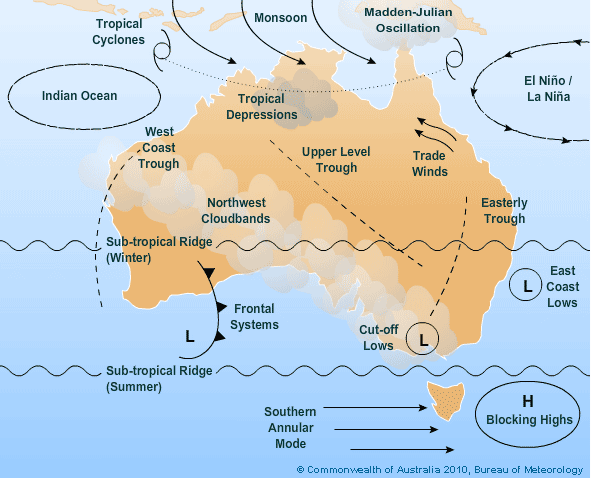
Australia S Climate Drivers Variability And Extremes Coastadapt
Describe the dominant climate in Australia.
. Initially used to describe a happy-go-lucky character capable of battling through hard times the term was employed after World War II to distinguish those born domestically from new immigrants from western and southern Europe. During summer the outback is very hot and humid some days have seen temperatures as high as 50C. Semiarid or steppe marine west coast humid subtropical tropical wet and dry.
Australias seasons are at opposite times to those in the northern hemisphere. In Australia the temperate forests stretching from southeast Queensland to south Australia enjoy a moderate climate and high rainfall that give rise to unique eucalyptus forests and open woodlands. In Australia we are lucky enough to experience the tropical zone in the north the subtropical zone across much of our centre and temperate zones in the south.
Approximately 30 per cent of the country is considered to be in the tropics with fertile croplands but it has some extreme topography such as snowfields and rainforests as well. With maritime climatic influences drawn inland by Spencer Gulf and Gulf St. Australias climate is mostly arid to semiarid but the south and east are temperate and the north is tropical.
The dominant type of vegetation in Australia 23 per cent is the hummock grasslands in Western Australia South Australia and the Northern Territory. Hot sultry summers with high daytime temperatures and afternoon or evening thunderstorms are common. Figure 125 Aerial view of Uluru Ayers Rock Located in the Interior of Australia near Alice Springs.
There are a number of others methane nitrous oxide and trace. The geological feature that influences the climate of Australia most strongly is the absence of sufficiently high mountain ranges west of the Great Dividing Range running north-south near the east cost of the continent. Australian plant life is distributed in three main zonesthe Tropical Temperate and Eremiana pattern that reflects overall climatic conditions.
Unknown to many the outback can experience below freezing temperatures during the winter months. The international scientific community accepts that increases in greenhouse gases due to human activity have been the dominant cause of observed global warming since the mid-20 th century. The majority of Australians live in cities or towns on or near the coast and so beaches are a place that millions of Australians visit regularly.
In discussions on climate change we tend to focus on carbon dioxide CO 2 the most dominant greenhouse gas produced by the burning of fossil fuels industrial production and land use change. The climate is variable with frequent droughts lasting several seasons thought to be caused in part by the El Niño-Southern Oscillation. Other features like mountains ranges and.
Australias climate zones. There are four seasons across most of the country and a wet and dry season in the tropical north. Australias climate is governed mostly by its size and by the hot sinking air of the subtropical high pressure belt subtropical ridge or Australian HighThis moves north-west and north-east with the seasons.
What causes much of the east-southwestern part of the country to experience warm humid and marine west coast climates. Vincent the southern coastal zone of the state has been characterized as having a Mediterranean climate with mild to cool wet winters and hot dry summers. March to May is autumn.
It is not high as mountain ranges go but is high enough to force winds crossing it to rise high enough to lose some of their moisture as rain or in the southern states. The temperate rain forests of Tasmania are extraordinarily complex and contain species from the time when the island was part of the super-continent Gondwana. Australian Bureau of Agricultural and Resource Economics and Sciences ABARES.
The interior of this down-under country is a vast desert but also has extensive grasslands usually referred to as the outback with flat terrain and a dry climate. Winters are mild and the precipitation that falls then is in the form of snow. Australias warm climate and long coastline of sandy beaches and rolling waves provide ideal conditions for water sports such as swimming and surfing.
Australias climate varies greatly throughout the eight states and territories. But CO 2 is not the only greenhouse gas that is driving global climate change. The challenge Changes to the climate system have occurred and are likely to continue.
The climate in the Australian desert generally referred to as the outback on maps is very hot and dry. Describe the conditions typical of a humid subtropical climate. The rock rises 1142 feet above the outback and is 22 miles long.
The distribution of these land uses Figure 51 reflects the history and pattern of European settlement of Australia and the intersection of that settlement with climate and resources relevant to primary production. Continued emissions of greenhouse gases will cause further warming and changes in all. 2 ABARES is an independent research agency of the Australian Government.
And September to November is. The Tropical Zone which arcs east and west across the northern margin of the continent and extends halfway down the eastern seaboard has a mainly dry monsoonal climate with some wet regions. Climate classifications help people know what types of conditions a region usually experiences through the year.
It is listed as a World Heritage Site. Aussie is a colloquialism that was used during World War I to refer to Australian-born people of British or Irish ancestry. Although most of Australia is arid desert it supports a wide range of habitats thus making it incredibly biodiverse.
We then describe dominant climate change visual frames identified through previous research suggest possible considerations in formative evaluation of each dominant frame and. An investigation of responses to newspaper climate change images in Australia the United Kingdom and the United States ONeill et al 2013 found that the. Rather than having to describe the full range of conditions observed in a region over each month or season of a year a classification scheme can communicate expected conditions using just two or three terms.
The main climate types in Australia areEquatorial most northern tip of AustraliaTropicalGrasslandSub-tropicalDesertTemperate both warm temperate and cool temperateSee the related link below. The site is sacred to the Aborigines and is a major tourist attraction. December to February is summer.
By contrast rainfall in the arid interior is highly erratic. Swimming is a popular pastime for Australians. Wikimedia Commons public domain.
June to August is winter.

Climate In The Pilbara Region Of Western Australia Agriculture And Food

Climate Zones Student Notebook Big Idea 7 Sc 5 E 7 6 Describe Characteristics Temperature Social Studies Middle School Sixth Grade Science 6th Grade Science

Maps Of Average Conditions
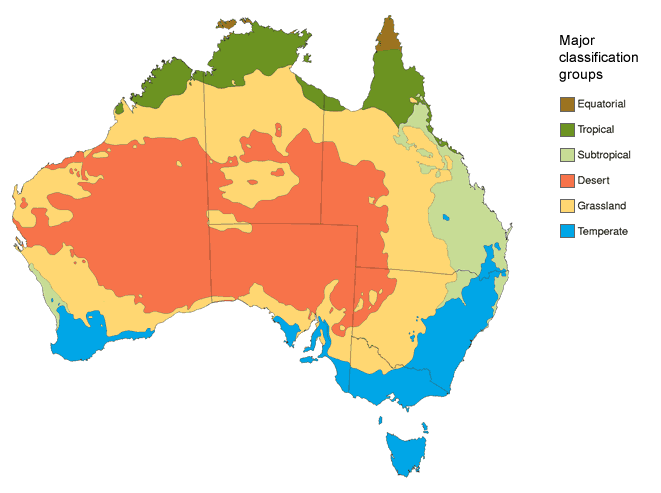
Australia S Climate Drivers Variability And Extremes Coastadapt

Rainfall Australia State Of The Environment Report
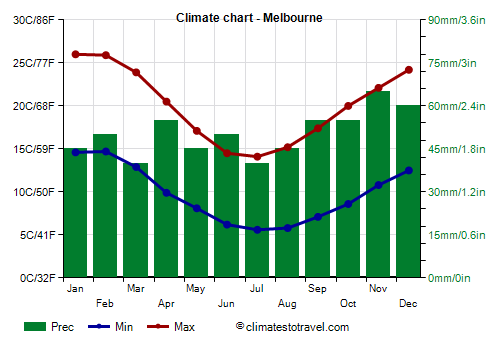
Melbourne Climate Weather By Month Temperature Precipitation When To Go
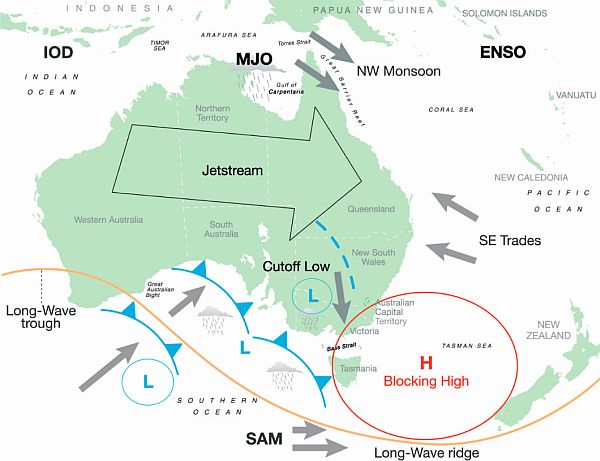
Australian Climate Influences

Major Climates Of Australia The Pacific Islands Video Lesson Transcript Study Com

Australian Climate Zones Go Study Australia


Comments
Post a Comment